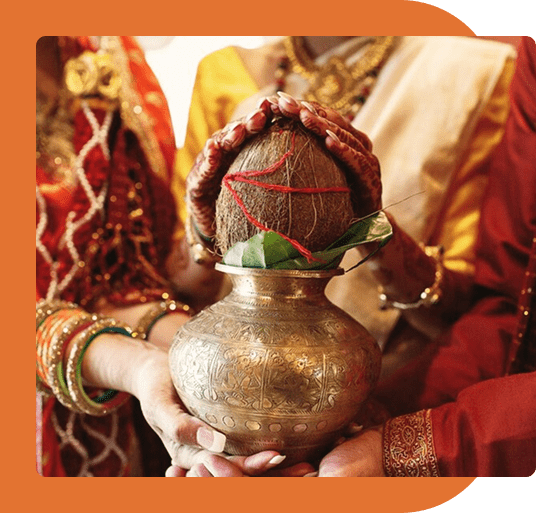
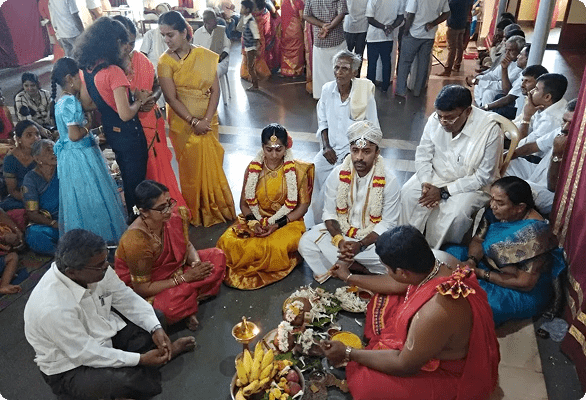
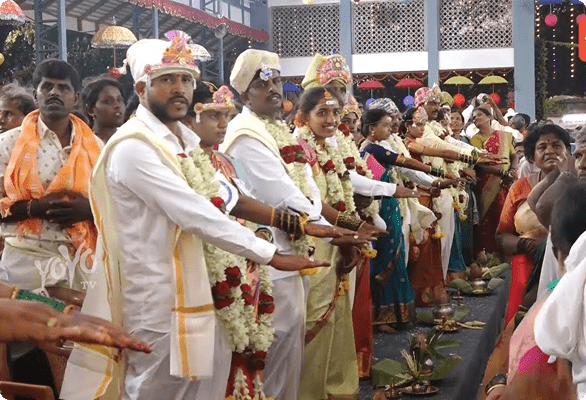
A Hindu marriage represents a divine sacrament (Vivaha Samskara) that transcends mere legal union, binding two souls for eternity through sacred vows. Steeped in Vedic wisdom, each ritual – from the holy fire (Agni) witnessing the union to the seven steps (Saptapadi) – carries profound spiritual symbolism. This sacred bond (Bandhan) is believed to endure beyond lifetimes, as the couple pledges to support each other’s dharma, artha, kama and moksha. The exchange of garlands (Jaimala) signifies mutual acceptance, while the mangalsutra embodies divine protection and eternal connection. Ultimately, Hindu matrimony transforms two individuals into spiritual partners, united in purpose before gods and ancestors.
Individual Marriage refers to a marital union where the partners prioritize personal happiness, mutual respect, and individual growth. It emphasizes personal choice over familial or societal pressures. Both partners maintain their independence while sharing responsibilities and emotional bonds. Communication, equality, and shared goals are key foundations. Such marriages often reflect modern, progressive values in relationships.
Individual Marriage refers to a marital union where the partners prioritize personal happiness, mutual respect, and individual growth. It emphasizes personal choice over familial or societal pressures. Both partners maintain their independence while sharing responsibilities and emotional bonds. Communication, equality, and shared goals are key foundations. Such marriages often reflect modern, progressive values in relationships.